
Showing posts with label news. Show all posts
Showing posts with label news. Show all posts
March 30, 2012
Kidney Failure
Kidney failure is a very serious complication. The kidney has a really important role which is to filter and clean the blood. They kidneys filter out waste and excess water that may be present. This waste comes from the food or from the breakdown of tissue. If the kidneys stop functioning, the blood will not be clean and will become toxic. In the modern world we live in now, procedures can be carried out in order to keep a person alive by cleaning his or her blood without the use of kidneys. In order to do this the patient must have his blood filtered from a dialysis machine. A person must be hooked up to this machine for several hours in order to clean the blood. A long and expensive task that the kidneys would have done quicker, more efficiently, and for free. But, not anyone can go and be hooked up to a dialysis machine. Our veins have thin layers that would not be able to withstand numerous punctures and having a large amount of blood taken out. Arteries are not superficial like veins and rather are deep. This makes them hard to reach, especially since this will be needed every week. To get the best of both vessels, a vascular surgeon constructs a fistula for the dialysis patient. A fistula is a large blood vessel that is created by joining a vein and artery together. By doing this the vein grows and becomes much stronger. Additionally, the blood pressure increases. The fistula is near the surface of the skin and is strong, and has good blood flow. This makes for a viable vessel to withdraw large amounts of blood out of on a weekly basis. A fistula will be able to withstand a great deal of punctures making it a great option. These dialysis patients can truly appreciate the work kidneys do without us even thinking about it.


Aging Eyes
Many of the nuisances that come with getting older have not been given a clear reasoning as to why they occur. Some of these setbacks include a slower reaction time, memory loss, and insomnia. Recently studies have pointed to altered circadian clocks as the culprit for these consequences of old age. "The gradual yellowing of the lens and the narrowing of the pupil that occur with age disturb the body’s circadian rhythm." Because the eyes are aging, less sunlight is able to get to the the cells in the retina. The retina regulates the body's internal clock, and this disturbed internal clock is now said to be linked to ailments like heart disease and insomnia. Blue light is said to be greatly responsive with such cells in the retina, and as it turns out blue light is known to be filtered out as our eyes begin to age. A study was done testing the amount of suppressed melatonin on women of 20 years and women of 50 years after exposure to blue light. The older women had no were not affected at all while the younger women were. Also it was found that people increased their reaction times after having cataract surgery.
This article gives light to how a disturbed circadian clock can disrupt certain aspects of everyday function. It shows that getting outside even at old age is important, not only for physical activity but for the well being of our bodies. I will be sure to get outside throughout my life as it is beneficial and more engaging than staying indoors. Even the doctors mentioned in the article have installed sky lights in their offices because "artificial lights are 1,000 to 10,000 times dimmer than sunlight and the wrong part of the spectrum".

This article gives light to how a disturbed circadian clock can disrupt certain aspects of everyday function. It shows that getting outside even at old age is important, not only for physical activity but for the well being of our bodies. I will be sure to get outside throughout my life as it is beneficial and more engaging than staying indoors. Even the doctors mentioned in the article have installed sky lights in their offices because "artificial lights are 1,000 to 10,000 times dimmer than sunlight and the wrong part of the spectrum".
March 28, 2012
Building a Melanoma Vaccine
 Researches have recently trained mouse immune systems to eradicate skin cancer from within. They use genetic combination of human DNA from melanoma cells and a cousin of the rabies virus. The strategy used is called cancer immunotherapy. It uses a genetically engineered version of the virus to deliver a lot of genes derived from melanoma cancer cells directly into tumors. In the mice studies 60 percent of tumor-burdened mice were cured in less than three months! Building caner vaccines from tumor DNA is beneficial because tumors can adapt to the repeated attacks of a healthy immune system and display fewer antigens. While cancers can learn to hide from a normal immune system, it appears unable to escape an immune system trained by the DNA. I found this interesting because if scientists continue to work with this hopefully they can improve it and come up with a sure cure for melanoma cancer. This would help thousands of people, especially now a days since the sun is getting stronger.
"Genetic Risk and Stressful Early Infancy Join to Increase Risk for Schizophrenia"
This article is about how scientists are starting to better understand the cause of shizophrenia. Researchers from John Hopkins genetically engineered mice to have reduced levels of DISC1, a protein in one type of neuron found in the hippocampus. The mice with regular levels of DISC1 and reduced DISC1 had the same sized neurons. Meanwhile researchers at the University of Calgary did this same experiment on mouse newborns but induced stress on them, they did this by separating the newborns from their mothers for three hours a day. The mice with the reduced DISC1 levels had much larger disorganized neurons than the mice that had regular DISC1 levels. Finally they compared the DNA sequence of the mice with 2,961 patents with shizophrenia and they were able to pinpoint the gene that causes schizophrenia. "Now that we have identified the precise genetic risks, we can rationally search for drugs that correct these defects" says hongjun song, PH.D. co author, professor of neurology, and director of the stem cell program at the institute for cell engineering.
I liked this article because mental illnesses such as shizophrenia confuse me like the cause of them and such. So hopefully if they find the cause they will be able to find a cure to this and other mental illnesses I find it interesting how they were able to find the protein in the brain that causes schizophrenia in mice; and tie that into humans.

Green neurons have reduced DISC 1 protein
March 27, 2012
Control of Involuntary Responses of the Immune System Through Meditation?
 |
| Endotoxin Structure |
"Iceman" Wim Hof, who is well known for the several activities he has accomplished in low temperatures, believes that it is possible to control his immune response through concentration and meditation. Professor Peter Pickkers administered endotoxin, a component of bacteria that the immune system will react to as it gives "flu-like" symptoms, to Hof while he was meditating to see if his immune system would react. Hof's immune response was decreased by 50% compared to other healthy volunteers. Also, Hof barely showed any "flu-like" symptoms. Because these results have only been collected from one subject, several other people will have to be tested in order to confirm that this is possible.
Key to immune system could lie in the cheek!

I was intrigued by the results of this particular experiment because its quite amazing how cheeks cells can have such a potential to function in other parts of our body. I mean now cheeks cells are helping fight off diseases? How amazing is that? Maybe this might spark a new light in finding the cure for cancer as well.
March 26, 2012
An "Off Switch" Within Our Immune System?

Did you ever think it would bepossible for our immune system to be turned off? A new “off switch” has been
identified by scientists from Trinity College Dublin. There is a certain
protein, TMED7, which can “turn off” part of the immune system. With the
ability to turn off the immune system we are able to boost our immune response.
TMED7 is the first of the family of proteins that it’s a part of that helps
regulate out immune system.
If we are able to shut down our
immune response, it would help prevent our immune system from attacking our
bodies. This protein could be beneficial
to us when receiving vaccines. Often times when vaccines are received, our
immune systems don’t develop a strong response to the vaccine which basically
defeats the purpose of the vaccine.
March 2, 2012
New Research Explores Bacteria's Role In Leafcutter Ants' Gardens

Global Warming Effect On Transpiration

New research shows the global warming potential of carbon dioxide (CO2), which is the main greenhouse gas is underestimated as a climate change affect with plants. It was researched that plants "sweat" less when surrounded by more CO2. This means that plants lose less water when exposed to higher levels of CO2, which makes the surrounding air warmer. A team from The Indian Institute of Science showed that Higher CO2 levels make stomata, tiny pores on plant leaves open less widely and lose less water through transpiration that cools the surrounding air. Less transpiration means less cooling and this impacts global climate change. This also shows how plants have a big part in global warming because it reduces plant transpiration. I find the piece interesting how too much CO2 can cause a drastic effect on the environment in many different ways.
Down in the dumps? Blame your Immune System!
 Over the past few years, researchers have discovered evidence suggesting that the immune system is the source of depression. While conducting studies, researchers saw that people with depression tend to have higher levels of inflammation than people without depression. As a result, researchers have concluded that depression is an evolutionary adaptation. They’ve concluded that evolution and genetics have bound together depressive symptoms and physiological responses. This link allowed early humans to be able to fight infection, the major cause of death in humans' early history. This discovery also helps explain whey stress is a risk factor for depression. When a person receives a wound, the person becomes stressed in order to signal to the immune system that it should anticipate an infection resulting from the wound. If the person didn’t become stressed, the immune system would not be as prepared for infection.
This new discovery is very interesting because it could potentially lead to further research and discoveries about depression and its causes. Furthermore, with this information, scientists may be able to better treat people with depression. Instead of relying solely on antidepressants, treatments that are normally used to treat inflammation may be able to be used. It clear that depression will not every be completely eliminated; however, this new research shows that depression can actually have some benefits to humans.
January 22, 2012
Using Pigs to Test Stem Cells
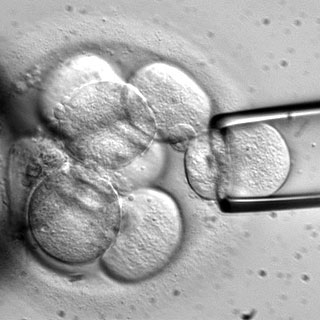 It turns out that rodents aren't always the best animals to perform medical tests on. Scientists have begun to test stem cells on pigs, instead of rodents, discovering that using pigs as tests subjects is a better way to determine the safety of future stem cell therapies. Since 50 percent of all chemicals test positive as carcinogens in rodents regardless of their source or identity, the studies conducted on rodents are not a reliable way to see how humans will react to certain medical treatments. Instead, scientists have discovered that pigs are perfect for testing stem cells because the adult-cell-sourced stem cells do not form tumors in the pigs. Initially, the formation of tumors in rodents raised concerns about the safety of induced pluripotent stem cells. However, the new studies conducted on pigs have shown that the use of stem cells has promise. Scientists are now trying to make pigs whose cells from the pancreas would demonstrate decreased rejection in human treatments. They will insert pig insulin-producing cells into other animals, such as dogs and cats, and will see if the cells will produce insulin without being rejected.
This new discovery paves the road for many new stem cell discoveries in the future. Testing stem cells on pigs will certainly speed up stem cell research, which will potentially help humans currently suffering from diseases like diabetes and cardiovascular disease. Hopefully this new research will allow major breakthroughs in stem cell research to take place in the near future - there may be many people who are counting on it!
January 19, 2012
We have moved.
 It seemed like the thing to do. Mostly because I'm lazy, and the wordpress install that we were using was slow. I think you will find that most things have remained basically unchanged. With the one exception that your work in the prior blog space will not follow you over here,
Subscribe to:
Posts (Atom)